


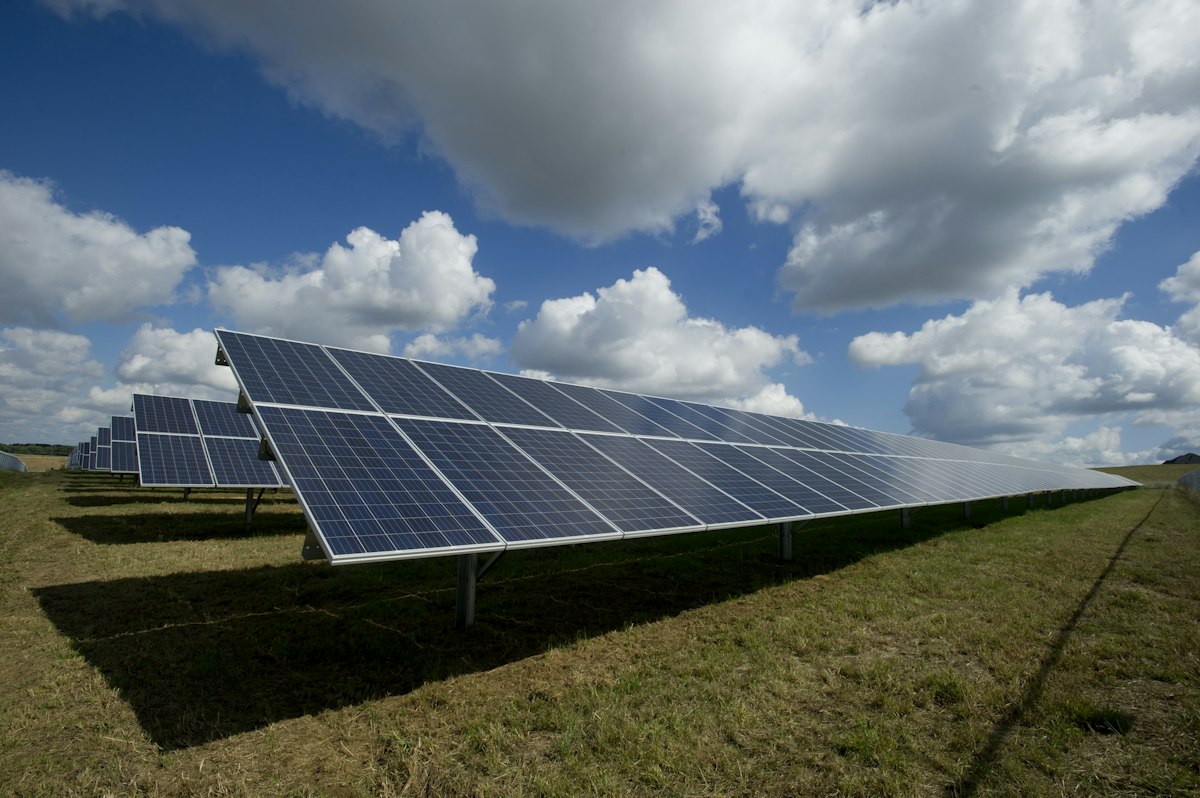
Rising energy costs, tightening environmental regulations, and growing tenant demand for sustainable buildings have pushed energy efficiency to the top of many commercial property owners' priority lists. The challenge, historically, has been financing these improvements without disrupting cash flow or tying up capital reserves. C-PACE financing, short for Commercial Property Assessed Clean Energy, has emerged as one of the most innovative and borrower-friendly solutions in the commercial real estate lending landscape, allowing owners to fund qualifying upgrades without a single dollar out of pocket at closing.
What Is C-PACE Financing and How Does It Work?
C-PACE is a public-private financing mechanism that allows commercial, industrial, and multifamily property owners to fund energy efficiency, renewable energy, water conservation, and seismic or resiliency improvements through a voluntary assessment added to their property tax bill. Rather than taking on a traditional loan with monthly payments to a lender, the borrower repays the financing over a long term, typically ranging from 10 to 30 years, directly through their property tax obligation. The assessment stays with the property, not the individual, meaning it can transfer to a new owner upon sale.
The financing is originated by private capital providers, then administered through a state or local government program. As of early 2025, C-PACE programs are active in more than 38 states and Washington D.C., with total cumulative C-PACE financing in the United States surpassing $8 billion according to data from PACENation. This broad availability makes it an increasingly mainstream tool for commercial borrowers across a wide range of property types, including office, retail, hospitality, industrial, and mixed-use assets.
According to PACENation's 2024 Market Report, the C-PACE market grew by over 30% year-over-year in 2023, with average project sizes exceeding $3 million in major metropolitan markets.

Eligible Improvements and Qualifying Property Types
One of the most appealing aspects of C-PACE is the breadth of eligible improvements. Unlike some narrowly defined government programs, C-PACE can fund a wide array of capital projects, provided they meet the energy or resiliency standards established by the administering program in each jurisdiction. Below is a representative list of commonly eligible improvements:
- Solar photovoltaic systems and solar thermal installations
- High-efficiency HVAC, mechanical, and refrigeration systems
- LED lighting retrofits and advanced lighting controls
- Building envelope upgrades including insulation, windows, and cool roofing
- Electric vehicle charging infrastructure
- Water conservation systems, including low-flow fixtures and greywater recycling
- Seismic retrofits and wind-resiliency improvements in qualifying states
- Energy storage systems and battery backup infrastructure
Eligible property types vary by state program but generally include commercial real estate such as office buildings, retail centers, hotels and hospitality properties, warehouses, self-storage facilities, and multifamily properties with five or more units. Owner-occupied commercial properties and investment properties alike can participate, making C-PACE a flexible tool for both business owners and real estate investors. New construction projects are eligible in a growing number of states, where C-PACE can be used to finance the incremental cost of building to a higher energy standard.
The Financial Mechanics: Cash Flow, Coverage, and Lender Consent
From a financial structuring perspective, C-PACE offers several advantages that distinguish it from conventional financing. Because the repayment term is long, often 20 to 30 years, the annual debt service associated with the assessment is frequently lower than the energy cost savings generated by the improvements. This positive spread means the project can be cash flow positive from day one, a compelling proposition for any property owner evaluating capital allocation decisions.
C-PACE assessments typically cover 100% of eligible project costs, including hard costs, soft costs, and financing fees. Loan-to-value limits vary by program and lender, but most C-PACE transactions are structured so that the total debt on the property, including the new assessment, does not exceed 70% to 80% of the property's stabilized value. Interest rates for C-PACE financing in 2024 and into 2025 have generally ranged from approximately 6.5% to 8.5%, depending on term, project size, and jurisdiction, which remains competitive for a fixed-rate, long-term capital source requiring no personal guarantee.
One critical consideration is lender consent. Because the C-PACE assessment holds a senior lien position on the property alongside property taxes, most C-PACE programs require the existing mortgage lender to consent to the new assessment before funding can proceed. In practice, many institutional lenders, including banks, CMBS lenders, and life insurance companies, have developed formal C-PACE consent processes. Borrowers should engage their current lender early in the process to confirm consent eligibility and timeline expectations.

Practical Advantages for Investors and Business Owners
Beyond the mechanics, C-PACE delivers a set of strategic advantages that resonate strongly with commercial real estate investors and owner-occupants navigating today's market environment. For investors, the ability to fund capital improvements without drawing on equity reserves or triggering cash-out refinancing in a high-rate environment is particularly valuable. Energy efficiency upgrades financed through C-PACE can meaningfully reduce operating expenses, improve net operating income, and ultimately support higher property valuations at exit.
For business owners who occupy their commercial properties, C-PACE offers a way to modernize facilities, reduce utility costs, and meet sustainability benchmarks without burdening the business's balance sheet. Many municipalities and corporate tenants now require or incentivize green building certifications such as LEED or ENERGY STAR, and C-PACE-funded projects can directly support those goals. Additionally, because the assessment transfers with the property, sellers may be able to negotiate value recognition for the improvements at the time of a future sale, effectively recouping the investment through a higher transaction price.
As the commercial real estate industry continues to adapt to evolving energy codes, ESG reporting requirements, and tenant expectations around sustainability, C-PACE is well positioned to become an even more integral part of the commercial lending toolkit. Expanding program availability, growing lender familiarity, and increasing project sizes all point to a financing product that is maturing rapidly and gaining widespread acceptance among institutional borrowers and lenders alike. Property owners who explore C-PACE today are positioning themselves to benefit from both immediate operating improvements and the long-term appreciation that increasingly accompanies energy-efficient, well-capitalized commercial assets.